
By Vikki Moran
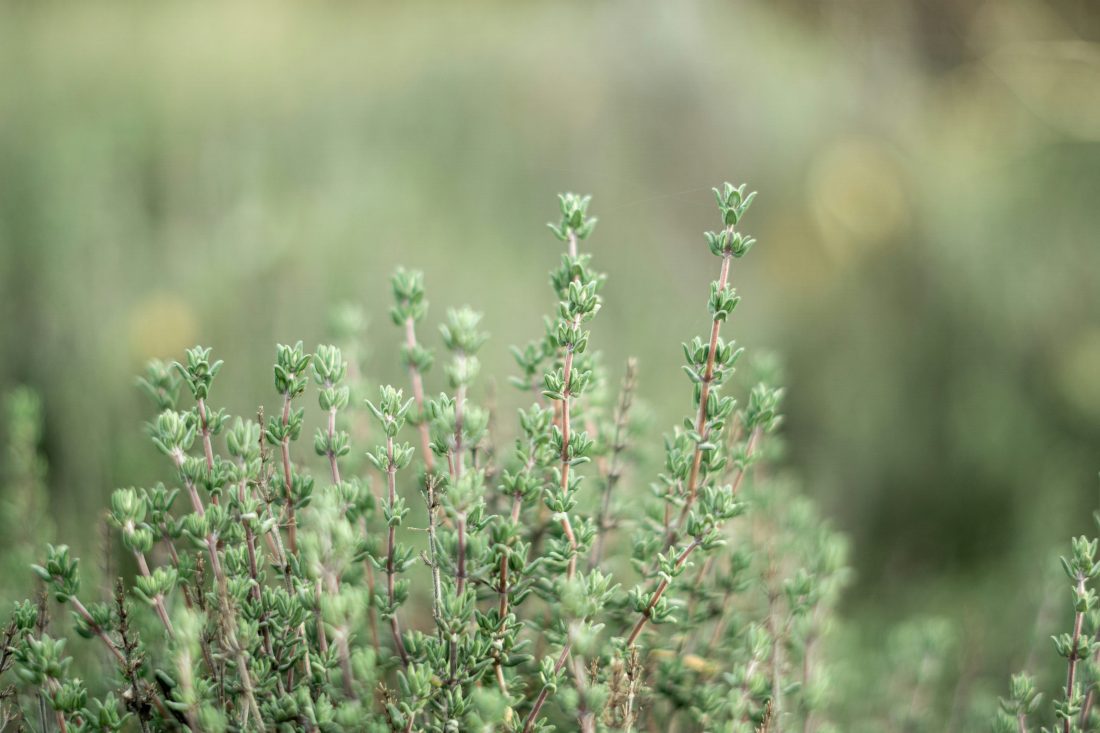
In the Southern kitchen garden, where flavor meets function, few herbs earn their keep like thyme. Whether tucked into the edge of a raised bed or steeped in a steaming teacup, thyme brings with it centuries of culinary tradition, folk wisdom and subtle charm. It is more than a seasoning—it is a small but mighty bridge between the past and present. Recently, I used thyme to create a surprisingly delicious thyme olive oil gelato. Its herbal earthiness balanced beautifully with the richness of the oil and sweetness of cream, proving once again that this humble herb has endless potential in our Southern kitchens.
Herb with Heritage
Thyme has grown in Southern herb gardens for generations. From the Lowcountry to the Appalachian foothills, it has long been prized for its ability to thrive in heat and poor soil, making it a natural choice for home gardeners. More importantly, it has earned a place in the Southern recipe box and the family remedy drawer alike.
While thyme has its roots in ancient Mediterranean cultures, it crossed the Atlantic with settlers and enslaved people who brought their herbal traditions with them. Over time, it adapted to the Southern climate and became an essential ingredient in both traditional dishes and natural healing.
Southern Roots: The Herb Garden as Tradition
Herb gardens are more than just practical in the South. They are part of a cultural identity. Generations of Southern families have grown herbs not only for cooking but for healing, preserving and even spiritual use. These gardens were once staples of every homestead, often planted just outside the kitchen door for easy access to everyday essentials like thyme, basil, rosemary, mint and sage.
Even today, whether it is a container garden on a Charleston porch or a sprawling raised bed in Georgia red clay, herbs remain central to the Southern gardening experience. They offer a connection to the land, to ancestry and to the rhythms of home cooking. For hobby gardeners, herbs like thyme are a gateway because they are easy to grow, deeply rewarding and incredibly adaptable.
Thyme in the Southern Kitchen

According to Jeff Cox and Marie-Pierre Moine in The Cook’s Herb Garden, thyme is one of the great culinary herbs, its flavor deepening and maturing with cooking. Southern cooks would agree. The herb complements everything from long-simmered beans and stews to roasted meats and vegetables. It is a key element in Creole cooking, especially in spice blends like bouquet garni, where thyme partners with bay leaves and parsley to flavor broths and sauces.
Here is a look at a few key thyme varieties and how they shine in the kitchen:
Common Thyme (Thymus vulgaris)
Its bold, earthy flavor withstands long cooking times, making it perfect for braised dishes, gravies and savory pies.
Lemon Thyme (Thymus x citriodorus)
With a fresh citrus note, lemon thyme pairs beautifully with fish, poultry and salads. It brings brightness to herbal teas and vinaigrettes.
Creeping Thyme (Thymus serpyllum)
Though milder in taste, it can still be used fresh in salads or as a garnish. More often, its beauty finds it a spot near outdoor dining areas, where it releases aroma underfoot.
Caraway Thyme (Thymus herba-barona)
Known for its spicy, caraway-like flavor, this variety adds complexity to root vegetable dishes, cheeses and rustic breads.
Silver-Edged Thyme (Thymus citrodorous “Argenteus”)
A variegated version of common thyme, it performs similarly in the kitchen but offers visual interest when used to garnish plates or herb butters.
Healing in a Teacup

Beyond the kitchen, thyme has a long history as a home remedy. Rich in thymol, a natural antimicrobial compound, it has traditionally been used to soothe coughs, fight infections and ease digestion. Southern grandmothers steeped thyme in hot water for tea when someone came down with a cold or added it to vinegar and honey to make a throat tonic.
But thyme’s wellness benefits go far beyond sniffles and sore throats. Herbalists and home gardeners have long turned to this versatile herb for a range of everyday ailments:
Thyme Tea for Digestion
A warm cup of thyme tea after a heavy meal can ease bloating, gas and mild stomach cramps. Its carminative properties help relax intestinal muscles and stimulate healthy digestion.
Mood Support and Focus
The scent of thyme, especially lemon thyme, is believed to have mood-lifting and mild stimulating effects. Sipping thyme tea or simply inhaling its aroma may promote mental clarity and ease mental fatigue.
Menstrual Relief
Some herbal traditions use thyme to help ease mild menstrual discomfort, thanks to its gentle antispasmodic properties. Combined with raspberry leaf or chamomile, it can be a soothing ally during difficult days.
Anti-Fungal Foot Soak
A strong infusion of thyme can be added to a foot bath to help combat fungal infections and refresh tired feet. Its antiseptic and anti-inflammatory benefits make it a great natural treatment.
Topical Wash for Skin Irritations
Brew a concentrated thyme infusion, let it cool and apply as a wash for minor cuts, acne or bug bites. Its antibacterial properties make it helpful for cleansing and calming irritated skin.
Thyme and Honey Cough Syrup
Steep thyme in hot water, then strain and blend with raw honey. Store in the fridge and take by the spoonful for lingering coughs or dry throats.
Scientific studies such as those published in the Journal of Applied Microbiology and Phytotherapy Research continue to confirm what generations have already known: Thyme’s compounds are not just folklore. They offer real, measurable benefits.
More Than a Seasoning
Today, thyme is enjoying a renaissance as more Southerners return to backyard gardening and cooking from scratch. For new hobbyists, thyme checks every box. It is beautiful, flavorful, healing and deeply rooted in Southern tradition. For the experienced gardener, it is a staple worth growing year after year.
And while it shines in the kitchen, thyme is also an unsung hero in ornamental gardens. Varieties like creeping thyme and woolly thyme make excellent groundcovers, softening stone paths, spilling gently over garden walls or thriving in dry crevices between flagstones. These hardy thymes release their aroma when stepped on and bring a delicate carpet of pink or purple blooms in the summer, offering color, scent and pollinator support with very little effort.
Planting thyme in stone crevices or raised rock beds is both practical and poetic. It echoes the herb’s Mediterranean origins while serving a modern aesthetic. It is an easy way to bring a touch of rustic charm to Southern landscapes and a practical way to keep herbs close at hand.
As Jeff Cox wisely notes, “you can never have too much thyme in the garden.” But in the South, it is more than that. Thyme represents a way of life—slow, intentional, nourishing and passed down like a favorite recipe.
Recipe For Thyme-Infused Olive Oil Gelato

3 cups whole milk, divided (use 1 1/2 cups at a time)
2 Tbsp. plus 1 tsp. cornstarch
3/4 Tbsp. liquid fruit pectin
Pinch of kosher salt
1 cup heavy cream
1 cup sugar
3/4 cup good quality olive oil
2 sprigs fresh thyme
In a heavy-bottomed saucepan, combine 1 cup heavy cream, 1 1/2 cups whole milk and 2 sprigs fresh thyme. Bring the mixture to a gentle simmer (do not boil). Remove from heat and allow thyme to infuse for 30 minutes. Discard thyme sprigs, then return the mixture to a gentle simmer.
In a separate mixing bowl, whisk together 2 Tbsp. plus 1 tsp. cornstarch, the remaining 1 1/2 cups whole milk, 1 cup sugar and pinch of kosher salt. While whisking, slowly drizzle in the 3/4 cup olive oil until well combined. Slowly pour the slurry into the saucepan with the infused milk and cream. Stir constantly over medium heat until the mixture thickens (about 15–20 minutes). Do not allow the mixture to boil.
Remove from heat, strain through a fine mesh sieve. Stir in 3/4 Tbsp. liquid fruit pectin. Cover and refrigerate overnight. Before churning, whisk the base once more. Pour into an ice cream maker and use the gelato setting, if available. Transfer to a freezer-safe container and freeze for several hours before serving.
Sources:
Cox, Jeff and Moine, Marie-Pierre. The Cook’s Herb Garden. Dorling Kindersley, 2010
National Center for Complementary and Integrative Health: www.nccih.nih.gov
Mount Sinai Health Library: www.mountsinai.org/health-library/herb/thyme
Journal of Applied Microbiology, Phytotherapy Research

