Madam: A Novel of New Orleans
Guest post by Cari Lynn, author of a new book about New Orleans Storyville district.

Guest post by Cari Lynn, author of a new book about New Orleans Storyville district.
So I’m sitting at the bar, looking for a cure for my writer’s block, when one walks through the front door. At the time — late November, mid-week, mid-afternoon — I had only my trusty laptop and coffee for company. The Big Cheese Bar & Grille was certainly not Hemingway’s Good Cafe on the Place St.-Michel, but if I wasn’t here I’d probably have been at Starbucks
Spring 2014 Books & Film Class Topic – Faulkner & Flannery: Exploring the Southern Gothic Held Wednesdays through February 26 at UL Lafayette Instructor: Dr. Mary Ann Wilson This is the final set of class notes on this topic. In the final class, we watched John Huston's 1979 film version of Flannery O'Connor's Wise Blood. Reading the book wasn't required and the movie can stand alone, but Wise Blood is a wacky story and a must-read for any O'Connor fan. Her first novel, Wise Blood was published in 1952 and received little attention at the time. The first chapter is an expansion of her master's thesis, "The Train,' from the University of Iowa, and other chapters are reworked versions of short stories she wrote. You'd never know that from reading it though. Wise Blood is a cohesive story that's very clearly written. While strange and extreme, it's also very O'Connor and incorporates all of her favorite themes to perfection. If you consider the time period, O'Connor was working on her prayer journal, released earlier this year, at the same time as Wise Blood. She was envisioning herself as a writer like she never had before and also struggling with her faith, asking God to "make me a
The upcoming Academy Awards on March 2 are equivalent to the Super Bowl in our book and a great chance to throw a viewing party. The South is well represented this year in "12 Years a Slave" and "Dallas Buyer's Club," with Texan Matthew McConaughey the darling of this year's awards and Louisiana-born Jared Leto not far behind. Their performances in "Dallas Buyer's Club" are some of the most memorable. Kentucky gal Jennifer Lawrence also stole the show in "American Hustle," which has an excellent chance of picking up Best Picture. And let's not forget "The Great Gatsby," which didn't perform as expected but did dazzle with costumes and music. COCKTAILS The Mint Julep - "The Great Gatsby" may not have lived up to all the hype last spring, but it got an Oscar nod for costume and production design. Celebrate the movie on Sunday night with a classic cocktail whose silver serving vessel would fit right in with all the glitz and glam. Bourbon Milk Punch - In another nod to Gatsby, this New Orleans favorite is perfect for a late-night or early morning party and could also be served in a punchbowl to satiate a crowd. Blackberry Sidecar - The juice from
Inside HBO's new series that calls to mind a Southern Gothic novel with a mythological twist.
It’s Carnival time in New Orleans. That means full on festivities, King Cake, throws, parades and, of course, costumes. by Andi Eaton Before donning your sequins and beads, let’s take a look back at where Mardi Gras style began. In 1827, the first Mardi Gras parade hit New Orleans as a group of elaborately dressed partygoers, emulating parades they'd observed in Paris, reveled through the streets. Thirty years later, the first recorded krewe was established. Considered secret societies, krewes are a New Orleans Carnival scene fixture. Members dress in highly detailed costumes, including masks, trinkets and beads, often made by the hand of the wearer. The krewe’s queen and her court in couture gowns of crystal, lace and silk rosettes are honored at each krewe’s Carnival ball. So, what goes into designing a gown for a Mardi Gras queen? In New Orleans, the go-to resource is Louisiana native Suzanne Perron. Perron spent more than a decade in New York City on Fashion Avenue. Working for some of the highest- regarded design houses including Carolina Herrera and Vera Wang, she earned her stripes — well, her crinoline and silk actually — and then returned home to open an atelier specializing in "once-in-a-lifetime gowns in
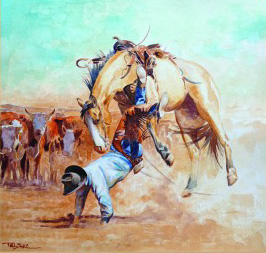
Faulkner & Flannery notes for week 4, a review of 'Washed in the Water: Tales from the South,' censorship in Georgia, the Texas Cowboy Poetry Gathering this weekend and new fiction and poetry in Southern Voice. Happy Literary Friday!
The sheriff was coming on seventy years old, and living with his widowed daughter, Sandra Mae Bragg, the past few years, her always talking about good old times with her dear, sweet Francis, made him long for something lost himself. “We were high school sweethearts,”
You say you won’t miss him when he’s gone and yet, you know it isn’t true. When he leaves the day will sift through your hands like only so much sand
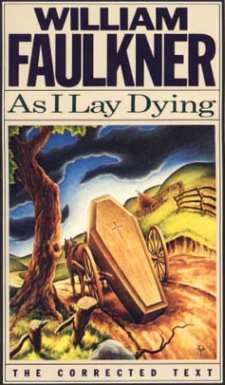
Spring 2014 Books & Film Class Topic – Faulkner & Flannery: Exploring the Southern Gothic Held Wednesdays through February 26 at UL Lafayette Instructor: Dr. Mary Ann Wilson Notes will be updated each Friday through February 28; comment to join in the discussion. On Wednesday, we delved into Faulkner's second novel As I Lay Dying. His most well known and the one that's taught in high school English, this novel has all the elements of the Southern Gothic. "You can't get more Southern Gothic than carting your mother's rotting corpse across the state for burial," says Dr. Wilson. As I Lay Dying is also one of the few books by Faulkner that has much humor in it, but not everyone in class agreed with that. Some viewed the novel as quite dark, but I can admit I chuckled a few times, especially in some scenes with Anse Bundren. It also helps to consider the time period this book is set in — the Depression-era South — and that the Bundren family is poor white trash, only a step up from the African Americans, who are mostly absent in this book. Most of them have their own motives for wanting to go to Jefferson to bury their mother,